|


 |
 |
|
 |
|
| Cities and villages in Crete |
|
|
|
|
|
 | ||||
| (fb) | ||||
|
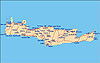
Crete
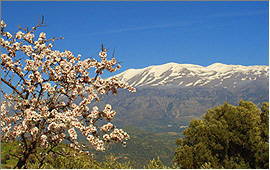
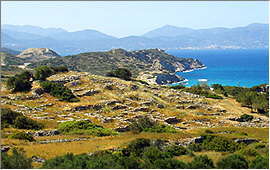
is the largest Greek island, and the fifth largest in the Mediterranean. Four big mountain massifs form the landscape, three of them having numerous summits of more than Crete had it's first flowering period during the Minoan Age which began about |
||||
|
Therefore, this oldest civilization in the Eastern Mediterranean is only some Thus, the Cretan culture did also not produce any comparable scientific and technologic peak performance such as e.g. the Henge Culture at Goseck (Sachsen-Anhalt, about |
 |
|||
| It's emphasis is more in the fine arts sector, which later on continued in the boom of paintings and statuary in ancient Greece. | ||||
 |
About the original Cretan language however, almost nothing is known up to the present day.
The Greek language which developed much later from about Since about |
|||
| The Turkish occupation endet in 1898, and Crete joined the Greek Republik in 1913. | ||||
|
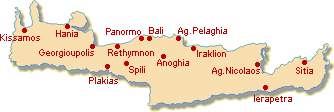
Click on the places' names herebelow or on the arrows
in front of them to open the more detailed presentations. |
||||
|
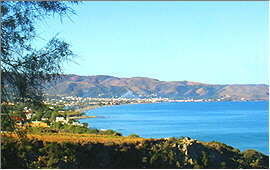
▶ Kastelli Kissamos
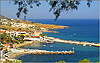
lies in the western part of the bay of the same name, in the Far West of Crete's north coast. On the scene there is everything what makes a genuine Cretan small town complete: Restaurants, tavernas, street cafes, doctors' offices, pharmacies, a small hospital, post and bank offices, a high school, supermarkets and shops of many kind. |
 |
|||
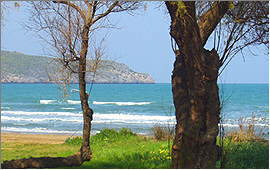 |
▶ Aghia Marina
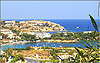
is a village in the eastern half of the bay of Hania, some The bigger hotel sites of the region concentrate here and in the neighbouring village of Platanias, followed by wide ranging gastronomic, sports and leisure facilities. |
|||
|
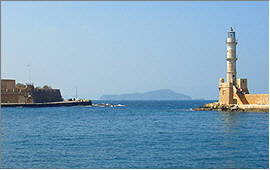
▶ Hania
on the western north coast of Crete is the capital of the governmental district of the same name, and after Iraklion the island's second biggest city. West of the old harbour basin there is the Venetian old town which today includes many small hotels and tavernas. Balconies which were fixed subsequently, and the minaret by the church of Aghios Nicolaos remind to the Turkish occupation. |
 |
|||
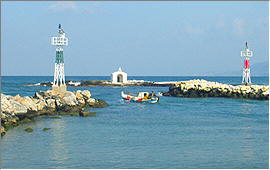 |
▶ Georgioupolis
is a former fishing-village at the western end of the bay of Rethymnon. Established around the old village center are apartments and hotels that offer a variety of choice and size. In the village center and by the port there is a number of restful cafes and restaurants. The original Mediterranean style can still be felt today. |
|||
|
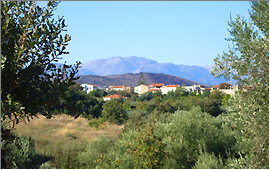
▶ Prines
is one of the villages above the bay of Rethymnon, by the Old National Road to Georgioupolis and Hania. Due to the panoramic views, numerous private holiday villas have been built during recent years on the hills and slopes that frame the village. Many of them can be hired by the week as well. |
 |
|||
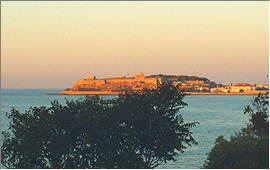 |
▶ Rethymnon
on Crete's north coast is the capital of the governmental district of the same name. It ranks as the island's cultural center and gives home to several museums, to the philosopical branch of the University of Crete, and other facilities. The town's landmark is the Fortezza, a fortress from the Venetian period |
|||
|
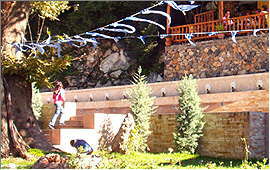
▶ Spili
is a small town counting only approx. In the town center, lifestyle is expressively relaxed. A Venetian style fountain with 25 water-spitting lionheads is the town's landmark. |
 |
|||
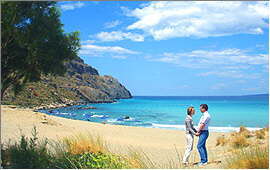 |
▶ Plakias
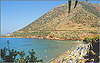
is an old fishing village on the south coast of the district of Rethymnon. It is known to individual tourists for some years, but still rather untouched by mass tourism. Around the port and further eastward along the sandy beach which lines the bay are some smaller hotels and apartment facilities. |
|||
|
▶ Aghia Galini
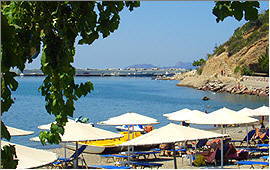
lies on the south slope of the small Vouvala Massif, which parts the bigger Kedros Massif from the south coast, and marks the south-eastern tip of the governmental district of Rethymnon. In recent years, many small hotels and apartments facilities have been built on the steep slopes above the small fishing port, enjoying unique views of the village, the coast and the Messara bay. |
 |
|||
 |
▶ Platanias Rethymnou
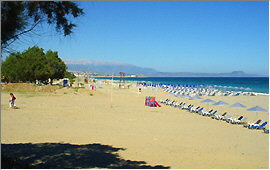
is one of the villages along the bay of Rethymnon where the touristic life of the region concentrates. The sandy beach spreads in both directions over a total distance of The village is frequently also called "Platanes" and even a sign by one of the village entrances shows this name. |
|||
|
▶ Maroulas
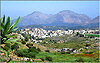
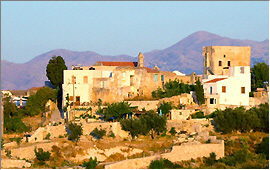
is a picturesque medieval village on a slope above the bay of Rethymnon. Two watchtowers from the times of the Venetian occupation make the village's skyline in front of the Ida mountains. In the village center there is a kafenion, a herb shop, and the taverna of Papas Nikos who is the local priest. |
 |
|||
 |
▶ Adelianos Campos
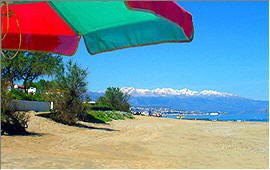
means "the plains of Adele", and Adele is a village above the eastern half of the bay of Rethymnon. So Adelianos Campos is the flat areal between the village and the coast. The soil is of poor quality, but there is a mile-long sandy beach. Therefore, the local farmers decided already many years ago to grow hotels rather than olives. |
|||
|
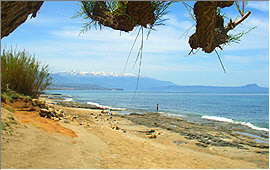
▶ Pighianos Campos
has only one bigger hotel resort and some medium-size ones, but in exchange there are several friendly private apartment facilities which mostly have their own swimming pools. By the main road there are tavernas, supermarkets, car rentals, bistros and ATM machines, and the shops and restaurants on the scene are prepared for the demands of individual tourism. |
 |
|||
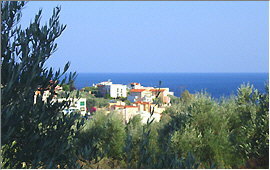 |
▶ Sfakaki
is not really a genuine village. It is more a settlement on and between some hills, where some lanes and a number of houses have been built during recent years. Among others there are private detached single-family homes and apartment facilities, and since some years there are also some lovely holiday villas which can be hired by the week. |
|||
|
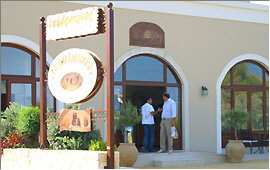
▶ Stavromenos
is the biggest of the villages in the eastern part of the bay of Rethymnon. A wide supply of shops and catering concentrates here: There are |
 |
|||
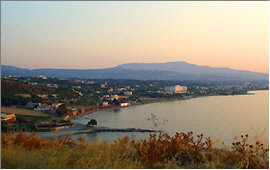 |
▶ Scaleta
is the easternmost village inside the bay of Rethymnon. It includes two big and some smaller hotels, as well as a colourful mix of shops and catering enterprises which are mainly orientated to tourism needs. The coastal area of Scaleta also has several small sandy beaches, and by the eastern edge there is a pebbled beach just below the church. |
|||
|
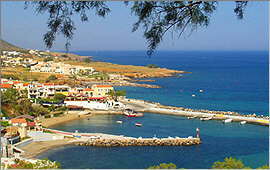
▶ Panormo
was the port of the ancient town of Eleftherna which is In the village center as well as around the port there is today a number of apartment facilities, tavernas and shops which have adapted to the needs of a rather relaxed way of tourism. |
 |
|||
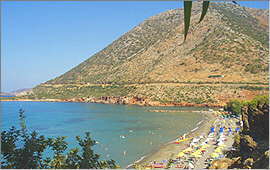 |
▶ Bali
is a former fishing village on the island's central north coast. It is reported from old times that the village formerly had a different name. They say that during the era of the Turkish occupation, a Bey fell in love with the beauty of the fishing village and changed it's name into "Bali" as he was a lover of South Sea novels. |
|||
|
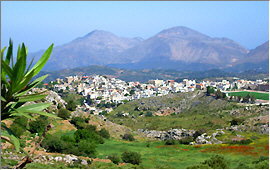
▶ Anoghia
is not only Crete's biggest mountain village, but with an altitude of The people of Anoghia were allways highly respected for their musical tradition and all over Crete they have a reputation for their excellent dancers and folkloristic musicians. Some of the best families of musicians come from here. |
 |
|||
| A treasure of the village is a tiny private ▶ museum that exhibits outstanding objects of the painter and sculptor Alkibiades Skoulas. | ||||
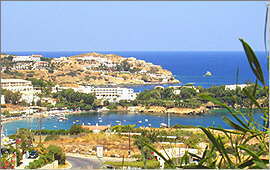 |
▶ Aghia Pelaghia
is a former fishing village on the central north coast of Crete, Restaurants, tavernas, bars and shops nowadays row up in the center by the old fishing-port. |
|||
|
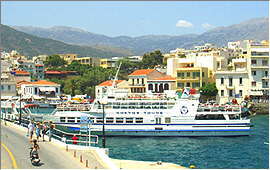
▶ Aghios Nicolaos
is the capital of the governmental district of Lassithi. The inhabitants managed to preserve the original Mediterranean lifestyle, which mainly determines the character of the tavernas and kafenions around lake Voulismeni. Even being a visitor, one can sit and watch for hours how time goes by. |
 |
|||
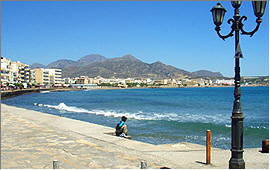 |
▶ Ierapetra
is Europe's southernmost town. It lies in the Far East of Crete's south coast and is the fourth biggest town of the island. Kato Mera, the old town of Ierapetra, is of typical Mediterranean flair and has many small shops and workshops where hand-made souvenirs of many kind are on offer. |
|||
|
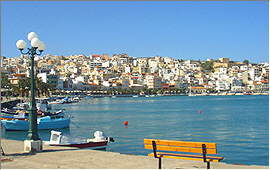
▶ Sitia
lies in the far east of Crete's north coast. The island's easternmost town spreads from the port up the slope of Vamvakia peninsula. The promenade that flanks the port was re-designed some years ago, and today ranks as one of Crete's most beautiful ones. |
 |
|||
| Text and photos by Ingo H. Dietrich | ||||
You are visitor # 3 3 1 9 7 9
 |
 |
|
| View the guestbook | Sign the guestbook |
▶ Recommend this site to a friend
(fb)
|
Recommendations:
| ||
|---|---|---|
 |
Creta online - Internet catalog for the Mediterranean Island of Crete | |
| ||
| Internet Reservation Service for the island of Crete: Hotels, holiday apartments and studios, vacation rentals and villas, car hire, excursions, and plenty of other offers and information | ||
 |
Holiday Villa Erofili at Asteri near Rethymnon in Crete | |
| ||
| Two-storey villa in peaceful surroundings above the bay of Rethymnon with large private swimming pool, sea view, barbecue, open fireplace and satellite TV. | ||
 |
Crete Holiday Villa - Private Holiday Lettings at Holiday Villa Crete | |
| ||
| Directory of private holiday villas Crete, holiday villas Rethymnon Crete, holiday villas Agia Galini, holiday villas Plakias Crete, holiday villas Sitia Crete | ||
 |
Holiday Apartment Crete - Private Holiday Flat Studio Apartment Crete | |
| ||
| Directory of private holiday apartments Crete, private holiday flat Rethymnon, private studio Agia Galini, private apartment Plakias, private studio Sitia Crete | ||